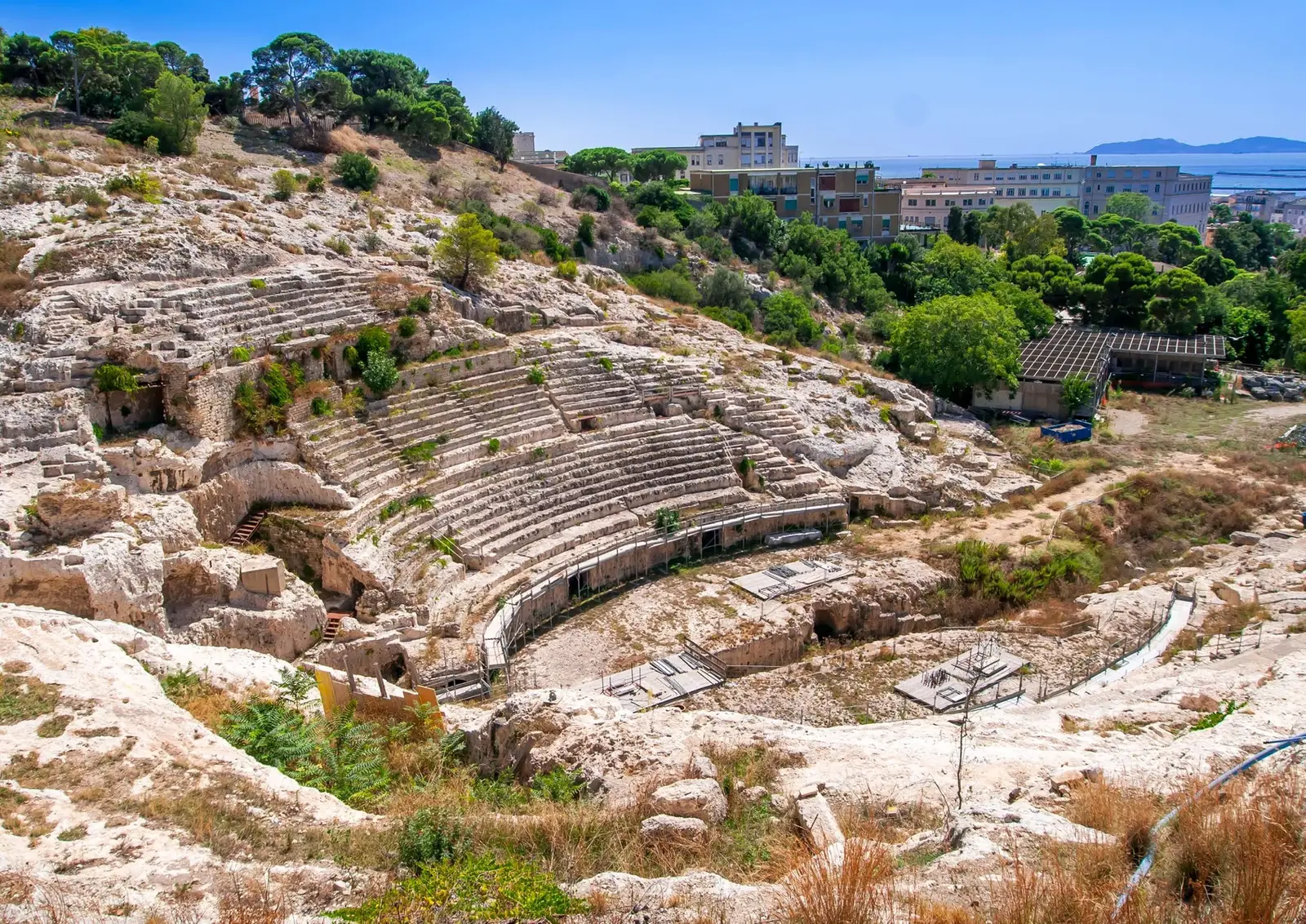
Nell’Anfiteatro romano la collina è parte dell’architettura. I costruttori unirono muratura e scavo, sfruttando il banco roccioso per ricavare una parte delle gradinate. È soprattutto questo lavoro nella pietra a essere arrivato fino a noi, mentre le strutture costruite si sono in gran parte perdute.
La visita invita a leggere il monumento attraverso ciò che resta: il rapporto tra arena, pendio e percorsi, la capacità di dare forma al paesaggio. Per conoscere le modalità di accesso è utile consultare le informazioni aggiornate del monumento.
At the Roman Amphitheatre, the hillside forms part of the architecture. Its builders combined masonry with excavation, cutting some of the seating directly into the rock. That carved structure is the principal survivor; much of the built fabric has disappeared.
The remaining monument invites a closer look at the relationship between arena, slope and circulation, and at the skill with which the landscape was shaped. Consult the monument’s current visitor information before planning access.
Dans l’Amphithéâtre romain, la colline fait partie de l’architecture. Les bâtisseurs ont associé maçonnerie et excavation, en utilisant la roche pour aménager une partie des gradins. C’est surtout ce travail dans la pierre qui nous est parvenu, tandis que les structures bâties ont largement disparu.
La visite invite à lire le monument à travers ce qui reste : le rapport entre l’arène, la pente et les passages, la capacité à donner forme au paysage. Pour connaître les conditions d’accès, il est utile de consulter les informations actualisées du monument.
Im römischen Amphitheater ist der Hügel Teil der Architektur. Die Baumeister verbanden Mauerwerk mit Felsbearbeitung und nutzten den natürlichen Untergrund für einen Teil der Sitzreihen. Vor allem diese Arbeit im Stein ist erhalten geblieben, während die errichteten Strukturen weitgehend verloren gingen.
Der Besuch lädt dazu ein, das Monument durch seine Reste zu lesen: das Verhältnis von Arena, Hang und Wegen, die Fähigkeit, der Landschaft Form zu geben. Für die Zugangsbedingungen empfiehlt sich ein Blick auf die aktuellen Informationen des Monuments.
En el Anfiteatro romano, la colina forma parte de la arquitectura. Los constructores combinaron mampostería y excavación, aprovechando la roca para crear parte de las gradas. Es sobre todo este trabajo en la piedra el que ha llegado hasta nosotros, mientras gran parte de las estructuras construidas se ha perdido.
La visita invita a interpretar el monumento a través de lo que queda: la relación entre arena, pendiente y recorridos, la capacidad de dar forma al paisaje. Para conocer las condiciones de acceso conviene consultar la información actualizada del monumento.
В римском Амфитеатре холм становится частью архитектуры. Строители соединяли каменную кладку и вырубку, используя скалу для части зрительских рядов. Именно работа в камне в основном дошла до нас, тогда как большая часть возведённых конструкций утрачена.
Посещение предлагает читать памятник по сохранившемуся: по связи арены, склона и проходов, по умению придавать пейзажу форму. Условия доступа лучше уточнить в актуальной информации о памятнике.